
You have no items in your cart. Want to get some nice things?
Go shopping
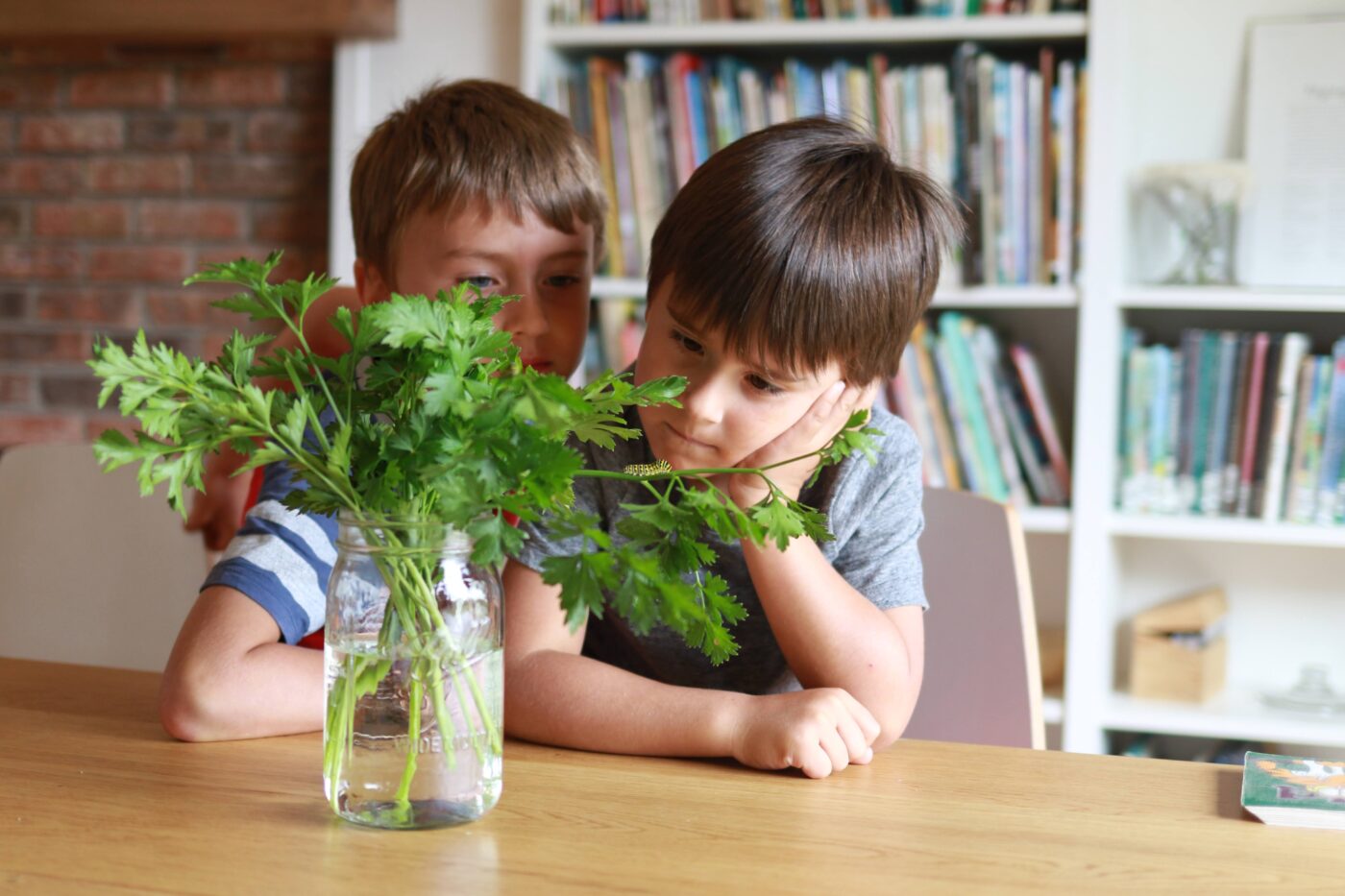
Object weekly lessons to focus on a specific plant or animal. You observe the real, living thing, either at home or in its natural environment. You then ask questions to direct the child’s attention to the subject and have them ask questions (write them down, if you can!) to ignite wonder and curiosity. For lesson material, I reference The Handbook of Nature Study by Anna Comstock. This book is a manual written for school teachers to teach nature, so the lessons are well organized and easy to utilize. It has information on the plant or animals as well as lesson ideas and questions.
Choosing a Topic
It should be native to your area and seasonal. For example, you don’t want to study nuts and fruits in March, or monarch butterflies in winter. I’ve found it easier to make a list of birds, wildflowers, trees, and other creatures that we are most likely to see during that season and then study one for as long as we want to, then move on to the next. For example, in December we may do a couple lessons about evergreen trees (one on the pine, the next week on Norway Spruce). If the kids and I are interested in learning more about evergreen trees, we may do a couple more lessons while reading chapters from Trees Every Child Should Know. After a few weeks we may put out some bird food and see which birds come to the feeder (chickadees and cardinals) and choose to do an object lesson on those birds. My form 1 kids (grades 1-3) get an introduction to plants and animals instead of specific species. They read an introduction to birds (like Birds of the Air by Arabella Buckley) and observe birds in general while their older siblings do object lessons with specific species in mind, like cardinals or chickadees.
Finding Specimens
For small creatures, like fish, insects, reptiles, and amphibians, it is best to create a little “home away from home” (an aquarium or terrarium) and bring them inside to study. This may be difficult, but researching the best season, place, and time of day to find the creature (and then actually catching it) is an important part of the lesson! I challenge my kids to safely catch and bring home our special study topic and research the type of habitat we need to make for them and food we need to procure. Once you’ve brought the animal inside and made a comfortable home, you can study it for a couple days before letting it back into the wild.
For plants, trees, large animals, and birds, you must study them as best you can in their natural environment. I bring my Handbook of Nature Study guide with me when my family goes on our weekly nature walk. I have the special study topic bookmarked so it’s easy to find if we happen upon the plant or animal. I can’t overstate the importance of doing some research as to when and where certain animals and plants can be found. While studying owls I learned we would have the best luck seeing them at night. So we scheduled our nature walk for 8pm and saw two Barred Owls!
The Object Lesson
Before the lesson I try to read the section for the teacher so I have some basic knowledge of the plant or animal we’ll be studying. I aim for one object lesson per week and schedule it for every Wednesday. It’s best not to force an unwilling child, they can always stay behind and do extra copywork or math lessons if they don’t want to participate 😉 While looking at the plant or animal I ask the questions from the Handbook of Nature Study lesson. You should definitely read over them beforehand in case there is some vocabulary or wording you need to adapt. Lessons should last between 10-30 minutes. They should be short, sweet, and to the point. Encourage your children to ask questions, like “I wonder why, I wonder how, I wonder what, etc” and write them down, if you can, so they can research answers later.
The questions are not meant to “drill” the child, but to help them see all those details that have something to do with the life of the creature studied. It helps them make connections and form relationships (e.g. “Where is the sycamore tree growing?” “by the stream.” “Do you always see sycamore trees growing by water?”).