
You have no items in your cart. Want to get some nice things?
Go shopping
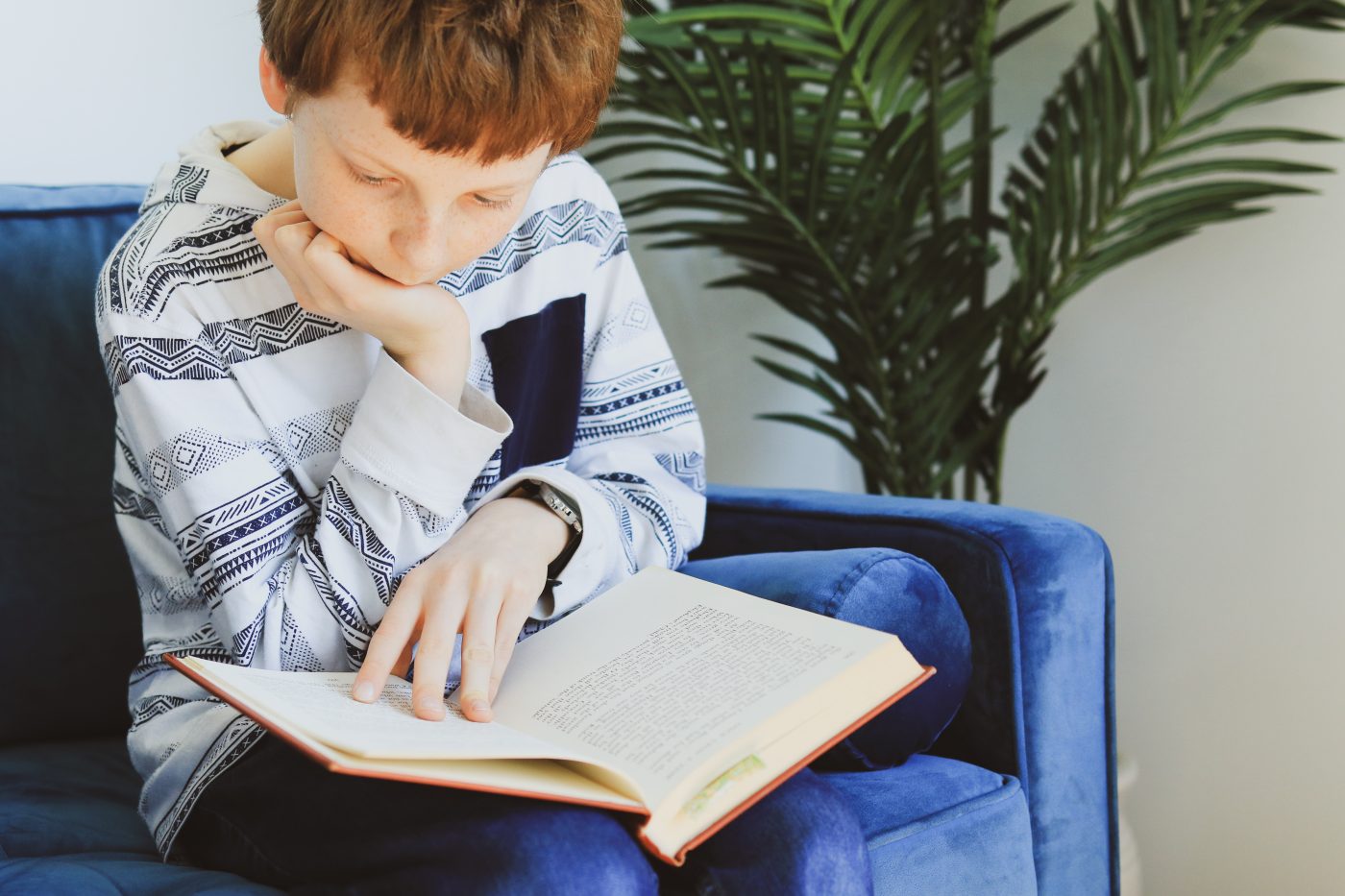
“The most common and the monstrous defect in the education of the day is that children fail to acquire the habit of reading. Knowledge is conveyed to them by lessons and talk, but the studious habit of using books as a means of interest and delight is not acquired.”
Home Education, p. 227
In many schools today –from elementary to high school, from public to homeschool– most of the work of learning is not done, not by the students, but by the teachers.
With all the distractions and technology available to us, we are losing the habit of reading. And if it was a problem in Charlotte Mason’s time, then it is even more serious today.
One of the most important habits we can teach our children is how to read a book and get knowledge from it. Charlotte called this “self-education.” She believed that when a child sits in class and listens to a lecture, takes notes, or fills out a worksheet created by the teacher, the child is passive. Most of the learning was done by the teacher.
One of Charlotte’s pillars of her philosophy is self-education. The question is “How do we educate ourselves?”
Through reading well-written books and narrating afterwards.
But why is it so important for kids to read books on their own? Isn’t listening to it read aloud the same? Or direct instruction (i.e. listening to a teacher’s lecture) enough to learn from?
Well, Let’s think about what’s happening in the mind when it reads:
It must pay attention to the book (not distracted by Legos or other activities) and imagine what is happening in their “minds eye.” Not only that, but they are taking in the spelling, punctuation, and grammar of the written word, which is foundational for writing. And finally, the mind must take all that knowledge and, in the words of Charlotte, “generalize, classify, infer, judge, visualize, discriminate, labor, in one way or another, with that capable mind of his until the substance of his book is assimilate or rejected, according as he shall determine.” (School Education p. 181)
So hopefully I’ve convinced you that your child should be reading their school books, what are good reading habits and how can you nurture them?
Here are some tips I’ve gathered from Charlotte’s volumes and my own experience:
- Begin early. In first grade I read aloud school books, but I require my child to sit next to me and follow along. I point to the words as I read them. It takes longer than if I read aloud and they played while listening, but I believe its an essential step in learning to read. Once my child knows how to decode words and we’ve had a few reading lessons I ask them to read a sentence of a school book every so often. I look for short, easy sentences and move up in complexity. Then we move on to paragraphs. Partner reading is very effective in both the habit of attention and reading. All my children were able to read their school books to themselves by third grade, some earlier. But every child is different. Meet your child where he’s at. The principle is to have them read to themselves as soon as they are able.
- Narrate after a paragraph, a page, then a chapter. Teach your children to stop after a certain amount of reading to narrate orally. In the book Make It Stick: The Science of Successful Learning the authors suggest this method for all ages. I just love finding parallels between Charlotte’s methods and cognitive science! The idea is to stop and explain or tell back to yourself what you just read. Your child will do this out loud for many years, but by high school they will silently narrate to themselves.
- Teach them to read slowly and deliberately, ONLY ONCE. Charlotte made it clear in her volumes and research supports her advice: rereading is not an effective learning tool. In fact, it is a bad habit that should be nipped in the bud from the beginning. Read passages only once and narrate to remember it.
- Teach them to ask questions. When you are reading aloud to a child, avoid asking pointed questions and let your child ask the questions. Charlotte said teachers should avoid asking if the child knows what a word means (let them figure it out through context and repetition) and stop reading to ask “teasing” questions like “what do you think will happen next?” She said an open-ended question at the end of the lesson like, “What would you have done in his/her place?” Are ok. But the child should be the one wondering and asking. Once they begin reading books on their own I provide my kids with sticky notes to write down questions. Charlotte advised to “let the pupil write for himself half a dozen questions which cover the passage studied; he need not write the answers if he be taught that [which leads into one of my favorite quotes] the mind can know nothing but what it can produce in the form of an answer to a question put by the mind to itself ” (School education p. 181)
- Take notes and mark sentences. They can also record thoughts they have and want to remember for later. I also give them flags/tabs to mark quotes and sentences they want to use for dictation or add to their commonplace book. “Let marginal notes be freely made, as neatly and beautifully as may be, for books should be handled with reverence. Let numbers, letters, underlining be used to help the eye and to save the needles fag of writing abstracts.” (School Education, p 181)
What about reading aloud?
I love reading aloud to my kids, and they love listening to audio books. As I’m sure most of you watching can relate to! So how do these fit into a Charlotte Mason education?
Charlotte knew that parents love reading to their kids, and she said it’s a great way to connect and bond over great stories. She said that reading aloud is a treat and doing so at bedtime is great. BUT, she said that if we “give him the habit of being read to, he will steadily shirk the labor of reading for himself.” I have found this to be 100% true with my boys. Reading is hard work for the mind and we must put aside other activities to do so.
My kids have to read all their schoolbooks, no reading aloud or audiobooks for school lessons. We choose a family read aloud for bedtime and try to save audiobooks for travel. Sometimes I’ll let them listen to the first book of a series on audiobook and then get the rest in printed books.
The habit of reading is an integral part of Charlotte’s method of education. She said that if we help children become at home with books, then their education is assured.