
You have no items in your cart. Want to get some nice things?
Go shopping
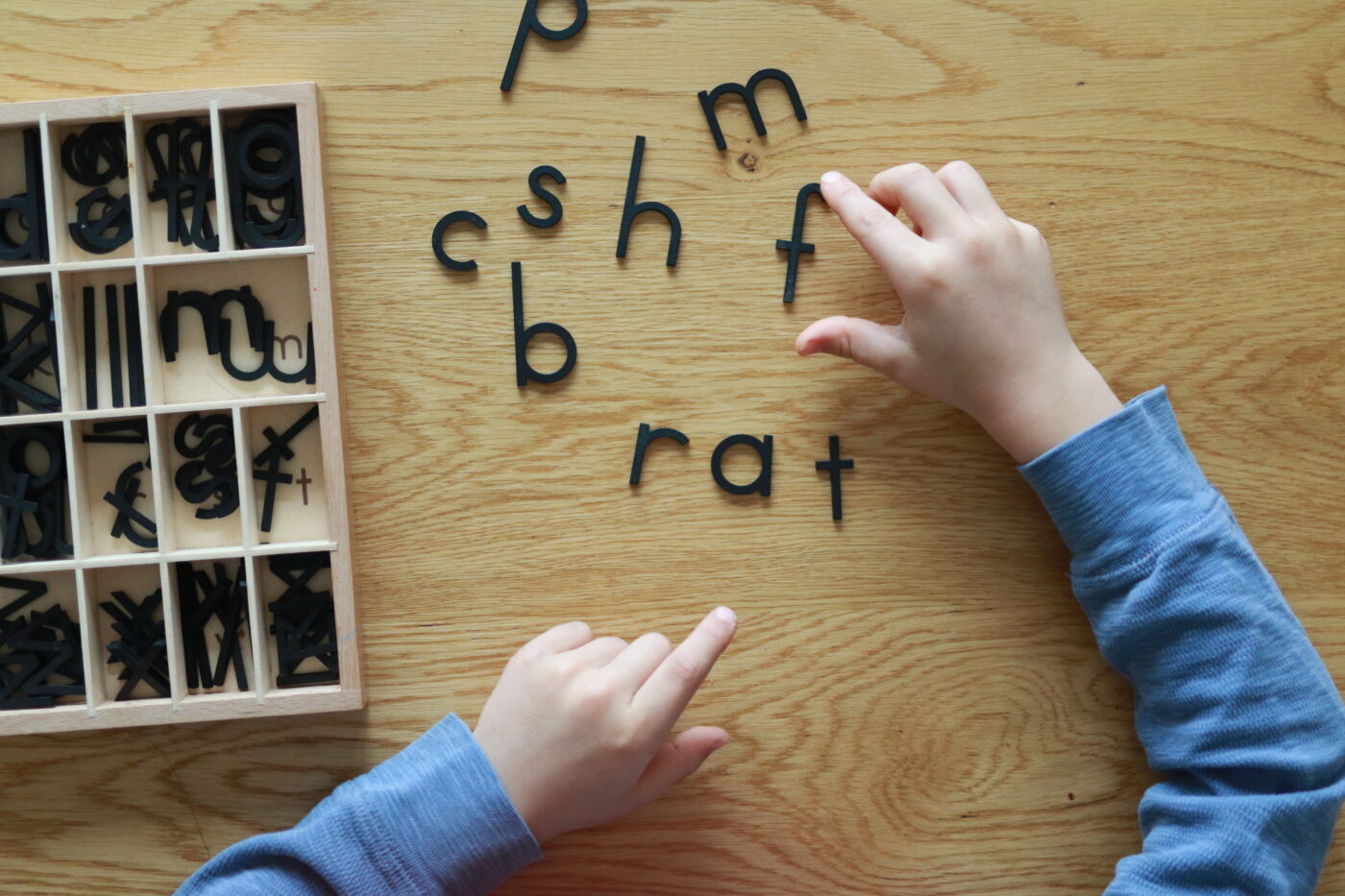
“The first exercises in the making of words will be just as pleasant to the child. Exercises treated as a game, which yet teach the powers of the letters, will be better to begin with than actual sentences… Do this with the short vowel sounds in combination with each of the consonants, and the child will learn to read off dozens of words of three letters, and will master the short-vowel sounds with initial and final consonants without effort. Before long he will do the lesson for himself. ‘How many words can you make with “en” and another letter, with “od” and another letter?’ etc. Do not hurry him.” (pg 202)
“Then the same sort of thing with final ‘ng’––’ing,’ ‘ang,’ ‘ong,’ ‘ung’; as in ring, fang, long, sung: initial ‘th,’ as then, that: final ‘th,’ as with, pith, hath, lath, and so on, through endless combinations which will suggest themselves. This is not reading, but preparing the ground for reading; words will no longer be unfamiliar, perplexing objects, when the child meets with them in a line of print.” (p. 203)
Using a moveable alphabet, start with short vowel words. Show your child that adding two sounds together makes a new sound: a added to t makes at. Add a c to at and you have cat. Ask your child to make new words by adding letters to at. Once your child understands this concept you can start word sorts. Word sorts is a concept from the Word Study method of teaching phonics and spelling. It is very similar to the methods described in Home Education, so I adopted (and adapted) this evidence-based approach to fit with Charlotte Mason’s methods.
Charlotte Mason reminds parents that in the word building stage children are not really reading yet, they are “spelling” (AKA phonics). She warns against “twaddle” beginner readers that are made completely of infinite combinations of three-letter words. These books can dampen a child’s enthusiasm to read because of the monotony.
Instead, use interesting sentences that contain words from your word sorts. Sources include books, poems, or your child’s own imagination. For example, when you build the word “cat” ask your child to think of a sentence with that word—“I have a cat, his name is Max.”or “I love to play with my bat and ball.” You can use moveable letters to write the sentence or write it on the chalkboard. Another way to help your child see meaning in words is by matching words to pictures or objects.
Continue word building exercises and sorts with the list of word families above. You can find word lists for each word family listed above in Don Potter’s Blended Phonics Reader (see Resources). Remember, Word building before school-age should be initiated by your child, and should only last as long as your child desires.
By 6-7 years old your child will be ready for formal (i.e required) phonics and reading lessons. Phonics lessons will be every other day, five to ten minutes per lesson. This is when I begin using Words Their Way: Word Sorts For Within Word Pattern Spellers. These will be separate from reading lessons, which will be explained in the next section. Set the timer at five minutes and start doing the “Spelling Checklist” (see Words Their Way post for PDF). You don’t need to immediately stop when the timer goes off, just finish what you were doing. At the next lesson, start where you left off. As your child’s ability to focus strengthens, increase the time spent on lessons, eventually making it to 10 minutes. If they seem distracted or unable to focus the entire time, it is best to end the lesson and move on to a different subject. Make lesson time a little shorter to match their focus ability and slowly work up to longer lessons.
The following PDF includes a variety of short vowel (CVC) words to use for word building:
http://www.donpotter.net/pdf/blend_phonics_reader.pdf