
You have no items in your cart. Want to get some nice things?
Go shopping
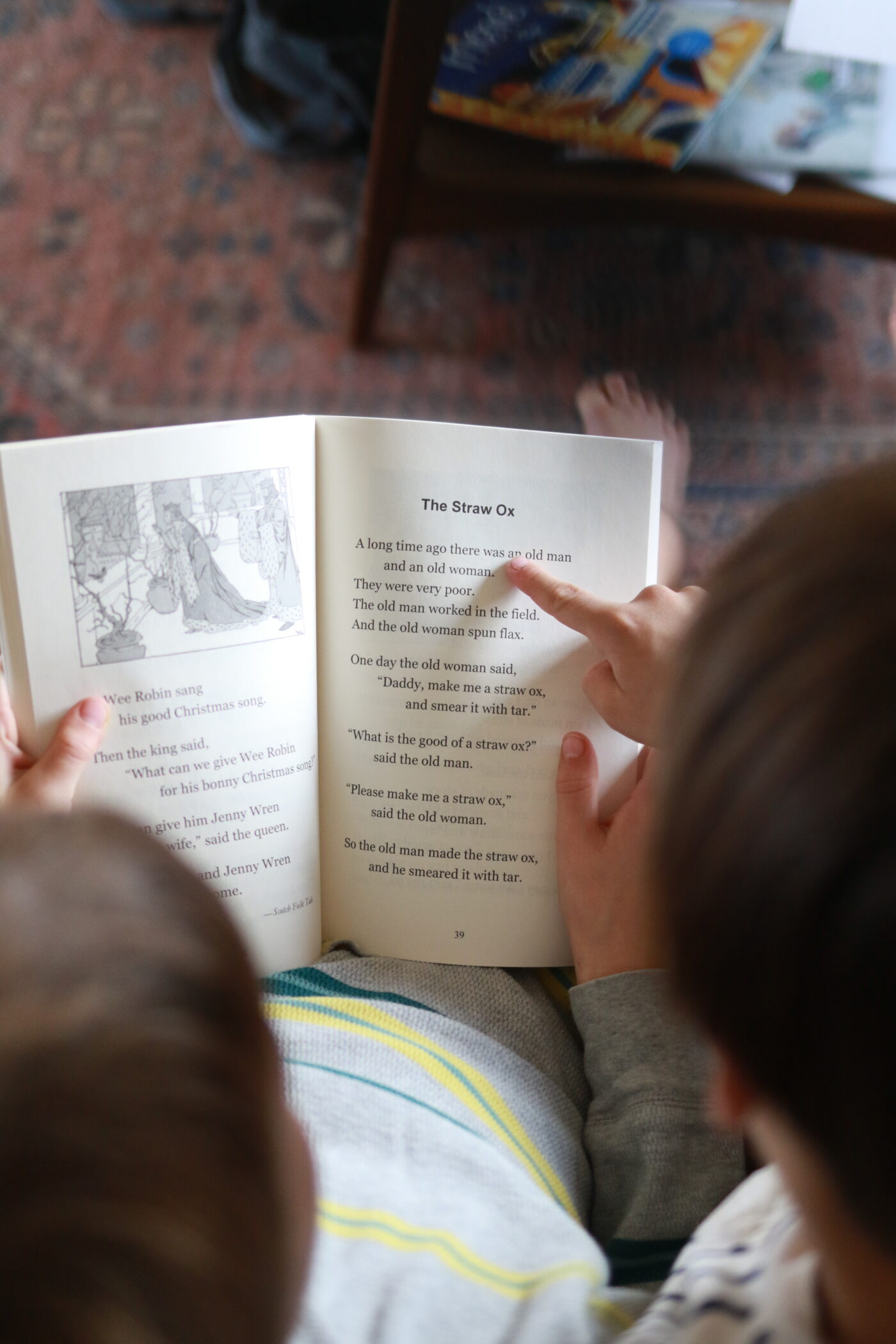
The Reading Process
Reading is a complex process; multiple brain processes must work together and multiple skills are required to read words and comprehend them simultaneously. The following is a method that works for most kids, but may not work for all. I recommend trying Charlotte Mason’s method first, then adjusting and changing methods to fit the needs of your child. Although all children learn to read the same way, each child is unique in how much instruction they require–some children need more explicit instruction, others may simply need some basic instructions to get started, while a small percentage (about 5%) will mostly figure it out on their own.
Charlotte Mason’s Method
The basic premise of Charlotte Mason’s reading philosophy is that children need to learn phonics and sight reading. Today, evidence-based practices support this philosophy. Spelling requires application of phonics and spelling rules. But when experienced readers read words they take each word in like a picture–they don’t sound out each phoneme individually. Like with all mental skills, the mind must become familiar with a concept concretely before abstractly. The concrete stage consists of learning the individual sounds of each letter (phonemes), then using manipulatives to build words. The next stage is automatically recognizing words by sight. Phonics combined with sight reading is key to nurturing competent and enthusiastic readers.
“Spelling and reading are two things. You must learn to spell in order to write words, not to read them.”
(pg 216, Home Education)
Phonics
Thousands of studies on reading instruction and brain development show that phonics instruction is essential for learning to read. English is a phonetic language and children need to learn how to “crack the code.” The phonics method Mason describes in her book is very similar to word study. Word study is a developmental- and evidence-based approach to teaching phonics. It allows children to organize words, classify them, and discover spelling patterns. I’ve simplified the method as outlined in the teachers’ manual Words Their Way to make it easier to understand and apply in a home setting. The curriculum is sold as a series, based on each developmental stage. They contain word sorts, questions, and lesson suggestions. There is no need to purchase the teacher’s manual, but we recommend purchasing the following guides for this stage:
Words Their Way: Word Sorts for Within Word Pattern Spellers
Words Their Way: Word Sorts for Syllables and Affixes Spellers
Words Their Way: Word Sorts for Derivational Relations Spellers (for advanced students)
Sight Words
When most people think of “sight words” they imagine a list of commonly used words that break a spelling rule, but any word can be learned by sight. When a child automatically recognizes a word it becomes a sight word. Learning to read by sight gets children reading books above their phonics level (does anyone really enjoy reading “Matt sat on the fat rat” over and over again?), and reading about things that actually interest them. Otherwise the child’s enthusiasm for reading suffers. If we only teach phonics and do not teach children how to read, we are doing them a disservice. For if readers have to stop at many words in a text to sound them out, growth in their reading could be greatly hindered, especially fluency and comprehension.
Some general principles to keep in mind as you teach your child how to read:
- A love for reading must be instilled before reading lessons begin—fill your house with a variety of living books, read aloud every day, and keep reading aloud even after your children learn to read.
- Learning to read can be difficult and does not come naturally.
- Multiple cognitive processes must be developed before reading is possible.
- Reading lessons work best when the material is interesting to the child.
- Make it enjoyable! Reading should be a delight.
The mind grows like the body: through periods of rest and growth. Your child may not be interested in reading lessons for a few months, and that is ok. Before the age of seven reading lessons should not be required.
I’ve successfully taught three of my boys how to read using her methods and I am so impressed with not only how effective it was in teaching my kids, but also how in-line it is with current research on reading and spelling.
Over the next month I’ll be posting videos and instructions on how to teach your child how to read using Charlotte Mason’s method as outlined in Home Education .